

PICATINNY Adapter: Is the Low Profile Version Right for You?

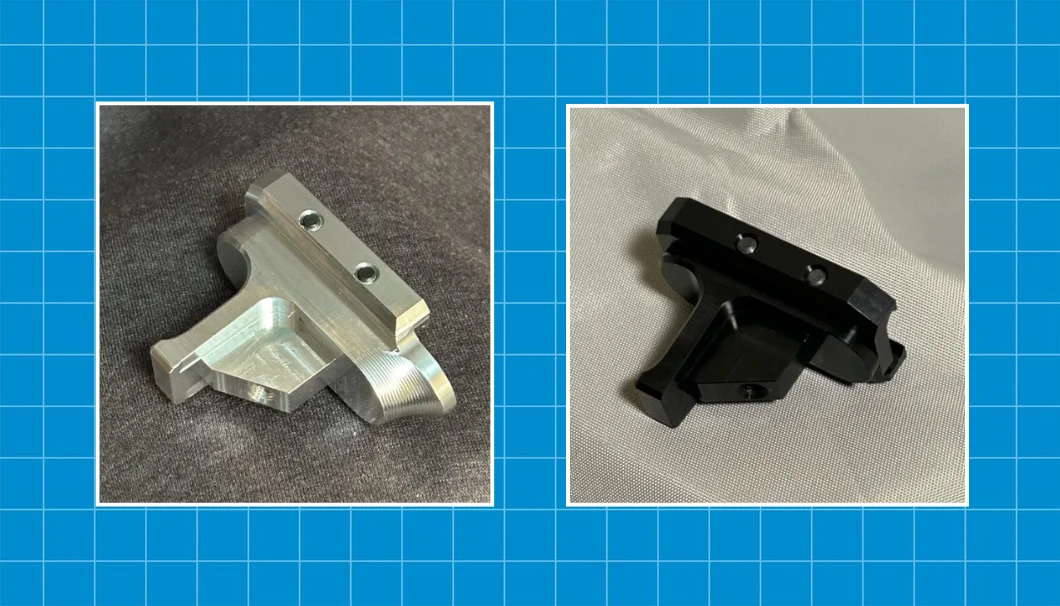
The PICATINNY adapter category covers a wide range of products, from rail extenders to scope mounts to grip accessories. In the context of forend control on an AR-platform firearm, the relevant product is the Grip Adapter Device from Carbine Leverage Equipment LLC, and the relevant question is whether the Low Profile or High Profile version is the right configuration for your specific build. This blog answers that question with the specificity the decision requires.
What is a PICATINNY adapter in the context of forend grip?
A PICATINNY adapter for forend grip use is a device that mounts to the PICATINNY rail on the handguard and provides a connection point for the shooter’s grip at the forend. In the Carbine Leverage Equipment LLC product line, this is the PICATINNY Grip Adapter Device (GAD), which accepts the customer’s own standard polymer pistol grip and connects it to the MIL-STD-1913-compliant PICATINNY rail through a CNC-machined billet aluminum adapter body.
One distinction that matters throughout this discussion: the GAD is not a pistol grip. The customer supplies their own polymer pistol grip. The adapter provides the structural connection to the rail. The polymer grip provides the ergonomic interface for the hand. These two functions are assigned to different materials for a deliberate engineering reason.
Why does MIL-STD-1913 rail compliance matter for adapter selection?
The Picatinny rail standard, defined by MIL-STD-1913 and adopted by NATO as STANAG 2324, specifies precise dimensional tolerances for rail cross-section, slot width, and slot spacing. Any component machined to these tolerances will fit any compliant rail without modification. The PICATINNY GAD from Carbine Leverage Equipment LLC is produced to these tolerances, which means it fits any qualifying PICATINNY rail on any AR-platform handguard without guesswork.
This matters practically because AR handguards come from dozens of manufacturers and some dimensional variation exists across less strictly toleranced products. A GAD built to MIL-STD-1913 compliance fits the rail as it was engineered to be fit, with a precise engagement that does not depend on the installer’s assembly technique to achieve rigidity.
What makes the low profile PICATINNY adapter the right choice for flat-top grip users?
The low profile PICATINNY adapter is the LP configuration of the PICATINNY GAD, dimensioned for flat-top and square-top polymer pistol grips. At LP height, the adapter positions the grip interface at the minimum practical distance above the PICATINNY rail surface. For flat-top grip users, this is the mechanically correct configuration because it delivers the tightest possible hand-to-rail distance.
That tight distance has a direct mechanical consequence: it shortens the moment arm through which muzzle rise exerts force on the support wrist. A shorter moment arm means less rotational force working against the support hand between shots. The shooter experiences this as improved stability during rapid fire and less lateral muzzle drift when reacquiring the target.
How does the LP configuration affect lever mechanics at the forend?
Lever mechanics at the forend are determined by the distance between the shooter’s hand and the handguard surface. Every millimeter of height between the hand and the rail increases the moment arm through which recoil acts on the support wrist under the physics of torque: Torque = Force x Distance. Minimizing that distance minimizes the torque, which translates directly to more stable muzzle control between shots.
The LP configuration minimizes this distance for flat-top grip users. It is not a cosmetic preference for a slim profile. It is a mechanical choice that reduces the physics working against the shooter during rapid fire. For shooters running beaver-tail grips or those who prefer a higher hand position matching the lower receiver geometry, the HP version provides the necessary clearance while delivering the same full-fist forend wrap.
Here is what the LP versus HP decision looks like in practice:
- Flat-top or square-top pistol grip: LP is the correct height, minimal hand-to-rail distance, optimal lever mechanics
- Beaver-tail pistol grip: HP is mechanically required for correct grip seating at the forend
- Flat-top grip with preference for higher hand position: HP provides the option, matching lower receiver grip geometry
- Both LP and HP: CNC billet 6061-T6 aluminum, Type 2 Hard Black Anodize, MIL-STD-1913 compliant
- Both LP and HP: include all installation hardware, no gunsmith required
What construction standard does the Carbine Leverage PICATINNY GAD meet?
Every PICATINNY GAD from Carbine Leverage Equipment LLC is CNC machined from solid billet 6061-T6 aircraft-grade aluminum. The billet CNC process starts from a solid aluminum block and machines the finished part from that block, producing uniform material integrity throughout with no internal voids or cast inconsistencies. The Type 2 Hard Black Anodize finish electrochemically converts the outer surface to aluminum oxide, permanently harder than the 6061-T6 base alloy.
The PICATINNY GAD ships with high-strength alloy steel socket head screws in black oxide finish and a hex-key L wrench. The M-LOK version additionally includes genuine Magpul M-LOK T-Nuts. Both are patent-pending under NPA #18/412,689 filed with the USPTO and are produced to the dimensional tolerances of their respective mounting standards.
How does the low profile PICATINNY adapter fit into a complete AR build?
The PICATINNY LP GAD fits into any AR build that runs a Picatinny-railed handguard and a flat-top or square-top polymer pistol grip. That describes a substantial proportion of the current AR market. The adapter mounts to the existing PICATINNY rail, accepts the grip the shooter already owns, and adds the full-fist forend wrap that the standard AR forend configuration has never provided. No handguard change is required. No grip replacement is needed.
For any purchasing or configuration questions, visit Carbine Leverage Equipment LLC or reach the team through the Carbine Leverage Equipment LLC contact page. For a related perspective on the performance benefits, read the published blog on Is a Pistol Grip Handguard Adapter Device the Key to Better Shooting?
LP or HP: The PICATINNY Adapter Decision Comes Down to One Variable
The PICATINNY adapter decision from Carbine Leverage Equipment LLC is ultimately a grip profile question. Flat-top or square-top grip: choose the LP. Beaver-tail grip or preference for a higher forend hand position: choose the HP. Both are built to the same billet aluminum standard, finished to the same military-spec anodize, and designed to connect your existing pistol grip to the PICATINNY rail at the forend through a structurally correct, material-appropriate interface. The physics work in your favor either way.
FAQs
Q1. Is the PICATINNY adapter the same as a pistol grip?
No. The customer supplies their own polymer pistol grip. The PICATINNY GAD is the aluminum adapter connecting it to the rail.
Q2. What rail standard does the PICATINNY GAD comply with?
MIL-STD-1913 / NATO STANAG 2324.
Q3. Who should choose the LP version?
Shooters running flat-top or square-top polymer pistol grips who want the tightest hand-to-rail distance at the forend.
Q4. Is the LP PICATINNY GAD currently in stock?
Yes, available now at: https://carbineleverageequipmentllc.com/product/picatinny-gad-lp/
Q5. Can the LP version accommodate beaver-tail grips?
No. Beaver-tail grips require the HP version for correct clearance height at the forend position.