

M-LOK Pistol Grip Mount: What Makes It the Best Forend Answer?

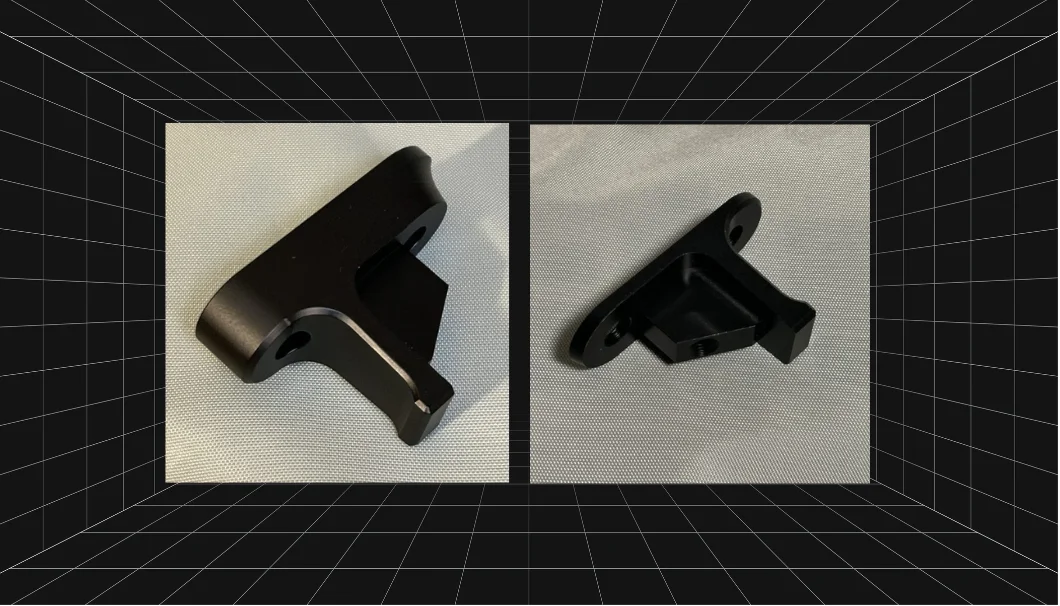
When competitive AR shooters talk about marginal gains, the forend is almost always where the conversation lands. Not because it is the most glamorous part of the build, but because it is the most overlooked one. The M-LOK pistol grip mount adapter from Carbine Leverage Equipment LLC addresses that oversight with hardware that is specific, structural, and built to a standard that the polymer foregrip market has never matched.
What is the M-LOK pistol grip mount and what problem does it solve?
The M-LOK pistol grip mount is the Grip Adapter Device (GAD) from Carbine Leverage Equipment LLC in its M-LOK configuration. It is a CNC-machined billet aluminum adapter that accepts the customer’s own standard polymer pistol grip and connects it to the fore-end of any M-LOK-compliant handguard manufactured under Magpul Industries Corporation’s M-LOK free use license. The customer supplies the grip. The GAD supplies the structural connection to the rail.
The problem it solves is the forend ergonomic gap that has existed in the AR platform since the beginning. The dominant hand has always had an engineered full-fist grip at the rear receiver. The support hand has never had an equivalent at the forend, and polymer standalone foregrips have never properly addressed this because they replace the shooter’s grip geometry rather than extending it. The GAD extends the shooter’s own grip to the forend position through a rigid aluminum adapter interface.
How does the GAD differ from vertical foregrips in design intent?
A vertical foregrip is a self-contained product. It has its own grip body, its own grip geometry, and its own rail mounting mechanism, all in a single polymer package. The shooter adapts to the foregrip’s geometry. The M-LOK pistol grip mount inverts this relationship. The adapter accepts the shooter’s existing grip geometry and translates it to the forend position. The shooter does not adapt to new hardware. The hardware adapts to the shooter.
That design intent is the reason the GAD enables a more ergonomically natural forend position for experienced shooters who are already trained with a specific pistol grip. Muscle memory built at the rear receiver transfers directly to the forend when the same grip style is used at both positions. No polymer foregrip on the market offers this because no polymer foregrip is designed to accept the shooter’s own grip.
What makes billet aluminum the only appropriate material here?
The forend connection bears torsional and recoil stress on every shot. Those loads cycle repeatedly across hundreds or thousands of rounds over the life of the product. A polymer body bearing those loads in a polymer-to-metal rail interface will develop micro-flex under repeated stress. That flex accumulates over time, gradually loosening the connection and reducing the structural rigidity that makes the forend grip effective in the first place.
CNC billet 6061-T6 aluminum does not flex under these loads. The alloy has a documented tensile strength of approximately 310 MPa per standard data sheets, and the CNC billet process produces a part with no internal voids, no mold parting lines, and no cast inconsistencies. The Type 2 Hard Black Anodize finish converts the outer surface to aluminum oxide through an electrochemical process, producing a surface harder than the base alloy and permanently resistant to abrasion and corrosion.
Why is the HP version the right call for specific shooter profiles?
The M-LOK pistol grip mount is available in both Low Profile and High Profile heights. The HP version is the correct configuration for beaver-tail pistol grip users, who require additional vertical clearance above the rail surface for their grip profile to seat correctly. The HP also accommodates flat-top grip users who prefer a higher forend hand position, one that mirrors the grasp geometry associated with the AR lower receiver.
HP selection criteria are practical: if you run a beaver-tail pistol grip, the HP is mechanically required. If you run a flat-top grip and prefer the higher forend position that matches your rear receiver grip geometry, HP is the ergonomic choice. If you run a flat-top grip and want the tightest hand-to-rail distance for optimal lever mechanics, LP is correct.
How does the best M-LOK vertical grip adapter actually perform?
The best M-LOK vertical grip adapter designation requires performance criteria beyond marketing claims. Here is what the GAD delivers against objective criteria:
- Structural connection: CNC billet 6061-T6 aluminum-to-rail, no polymer at the mounting interface
- Surface hardness: Type 2 Hard Black Anodize, aluminum oxide surface harder than base alloy
- Compatibility: any M-LOK handguard under Magpul free use license, covering the vast majority of the AR market
- Grip acceptance: customer’s own polymer pistol grip, LP or HP profile heights available
- Installation: genuine Magpul M-LOK T-Nuts, high-strength black oxide alloy steel screws, hex-key L wrench included
- Patent status: pending under NPA #18/412,689 filed with the USPTO
- No polymer foregrip meets the structural material specification. No standalone grip product accepts the shooter’s existing grip. The GAD is in a category of its own on both criteria.
What does the M-LOK pistol grip mount contribute to competitive shooting?
Competitive shooting at the USPSA and 3-gun level rewards grip consistency above almost everything else. A forend grip position that is identical on every stage, in every position, under every stress condition, reduces the variable that separates fast splits from inconsistent ones. The M-LOK GAD provides that consistency by giving the support hand a fixed, rigid, repeatable grip point at the forend that is identical in every configuration.
The full-fist forend wrap it enables also reduces wrist fatigue over the course of a match. For shooters running multiple stages across a competition day, that fatigue reduction compounds across every string of fire and produces measurable performance advantages in later stages. Read the related blog on Low Profile M-LOK Adapter: Why Your Rifle Setup Needs Better Ergonomic Symmetry for more on the competitive ergonomic case. For any ordering or configuration questions, use the Carbine Leverage Equipment LLC contact page.
The M-LOK Vertical Grip Mount That Actually Earns the Designation
The M-LOK pistol grip mount from Carbine Leverage Equipment LLC earns its place in the best category through verifiable engineering, not through marketing. CNC billet aluminum, Type 2 Hard Anodize, M-LOK free use license compliance, and a design that uses your own pistol grip at the forend. If you have been looking for the forend upgrade that actually matches the standard of the rest of your AR build, this is it. Visit Carbine Leverage Equipment LLC to configure and order yours.
Frequently Asked Questions
Q1. Is the M-LOK pistol grip mount a pistol grip?
No. The customer supplies their own polymer pistol grip. The GAD is the aluminum adapter that connects it to the M-LOK handguard fore-end.
Q2. Why is the HP version needed for beaver-tail grips?
Beaver-tail grips have a larger profile requiring additional vertical clearance above the rail surface. The HP height provides that clearance for correct seating.
Q3. What construction material is used?
CNC machined solid billet 6061-T6 aircraft-grade aluminum with Type 2 Hard Black Anodize finish.
Q4. Is the GAD suitable for competitive use?
Yes. The rigid, repeatable forend grip position it delivers directly benefits competitive shooters who need consistent grip placement across stages.
Q5. What is the patent status?
Patent-pending under NPA #18/412,689 filed with the USPTO.